Insurance and Safety for House Cleaners
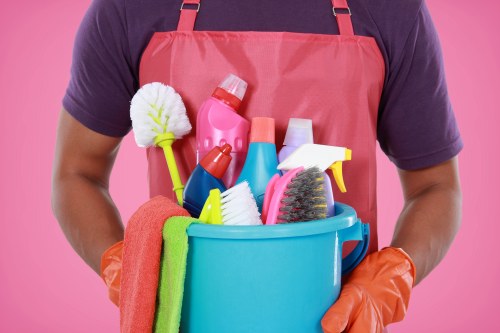 The modern landscape for house cleaners and home cleaning professionals demands a dual focus on robust insurance cover and rigorous safety standards. Whether you operate as an independent cleaner or run a residential cleaning service with multiple employees, the combination of public liability insurance and a proactive safety culture protects clients, staff, and your business reputation. This opening section sets the tone: safety is not optional, and insurance is the safety net that enables domestic cleaners to work confidently in private homes and communal properties.
Public liability is the cornerstone of protection for home cleaners and residential cleaning teams. A single accident in a client's home ??? from a slipped client on a wet floor to accidental damage to a cherished property ??? can result in substantial claims. Public liability insurance for house cleaning services provides financial cover for third-party injury and property damage and is often a prerequisite for working with estate agents, letting managers, or large property owners. It also reassures customers that your domestic cleaning staff are backed by adequate protection.
![A young woman with long brown hair, wearing a blue headband and matching light blue cleaning outfit, is smiling while cleaning a plain white wall in a residential setting. She is wearing yellow rubber gloves and is holding a blue cloth, which she uses to wipe the surface, suggesting attention to detail and professionalism typical of a house cleaning service in the UK. The environment appears well-lit with natural or soft artificial light, highlighting her cheerful expression and the cleanliness of the area. This scene exemplifies house cleaning tasks relevant to professional UK cleaning companies such as House Cleaners, who provide domestic services across towns like [TOWN], with an emphasis on thoroughness and safety, aligning with the company's focus on insurance and safety practices. The clear, uncluttered space and her engaged posture underscore a commitment to maintaining hygienic and well-maintained homes, supporting local SEO signals around cleaning services in the [POSTCODE] area.](/pub/_photos/cleaning/f1450797944.jpg) Effective insurance is only one piece of the puzzle; equally important is the continuous training and competency of cleaning staff. Investing in regular training for home cleaners keeps teams current with safe handling of detergents, proper use of equipment, and ergonomic techniques to minimize musculoskeletal injuries. As a result, residential cleaners who receive structured training demonstrate fewer incidents and reduced claims, which in turn can lower premium costs for the business over time.
Effective insurance is only one piece of the puzzle; equally important is the continuous training and competency of cleaning staff. Investing in regular training for home cleaners keeps teams current with safe handling of detergents, proper use of equipment, and ergonomic techniques to minimize musculoskeletal injuries. As a result, residential cleaners who receive structured training demonstrate fewer incidents and reduced claims, which in turn can lower premium costs for the business over time.
Beyond formal courses, on-the-job coaching and shadowing are powerful tools. New team members benefit from paired shifts with experienced cleaners, and routine refresher sessions help all staff internalize safe work practices. Emphasizing communication and situational awareness means domestic cleaners can spot hazards early and take corrective measures. Training topics should include chemical safety, infection control, ladder and step-stool use, and safe manual handling techniques.
![The image displays a light purple plastic basin filled with various cleaning supplies, including spray bottles, a yellow bottle, and a white bottle, all with different spray heads and caps. Resting on the edge of the basin are a pair of pink rubber gloves, suggesting readiness for cleaning tasks. A sponge with a yellow and white scrubber surface is positioned in front of the basin, alongside a yellow cleaning brush with stiff bristles. The background is plain white, highlighting the cleaning tools and supplies, which are arranged neatly and appear clean and unused. These items represent typical equipment used in domestic or commercial cleaning within a UK context, such as in residential kitchens or bathrooms, or commercial office spaces in towns like [TOWN] or within the [POSTCODE] area. The overall scene emphasizes the importance of professional cleaning and safety, aligning with the services offered by companies like House Cleaners, focusing on thorough, safe, and effective cleaning practices in the UK.](/pub/_photos/cleaning/f1396080032.jpg) Personal protective equipment (PPE) is a visible and practical expression of a safety-first culture. For home cleaners, PPE commonly includes gloves, aprons, non-slip footwear, eye protection when handling splashes or strong chemicals, and face coverings where appropriate. PPE for residential cleaners must be well-maintained, correctly fitted, and replaced according to manufacturer guidance; providing PPE is an employer responsibility where staff are not self-employed cleaners. A clear policy outlining when PPE is mandatory and how to dispose of single-use items reduces cross-contamination risks.
Personal protective equipment (PPE) is a visible and practical expression of a safety-first culture. For home cleaners, PPE commonly includes gloves, aprons, non-slip footwear, eye protection when handling splashes or strong chemicals, and face coverings where appropriate. PPE for residential cleaners must be well-maintained, correctly fitted, and replaced according to manufacturer guidance; providing PPE is an employer responsibility where staff are not self-employed cleaners. A clear policy outlining when PPE is mandatory and how to dispose of single-use items reduces cross-contamination risks.
To support these protective measures, a documented PPE inventory and issuance log for domestic cleaning staff ensures accountability and traceability. When clients request eco-friendly or fragrance-free products, home cleaning professionals should also have PPE guidance tailored to alternative products, as different formulations can present unique hazards. Transparent PPE policies also reassure clients that their home is being serviced by competent and safety-conscious cleaners.
Risk assessment is the systematic process that links insurance, training, and PPE into a coherent safety system. A risk assessment process for house cleaners starts with an initial walkthrough of each property to identify hazards: wet surfaces, steps, stairs, pets, fragile antiques, electrical risks, or clutter. Using a simple, repeatable checklist helps residential cleaners consistently capture potential issues and implement controls before work begins.
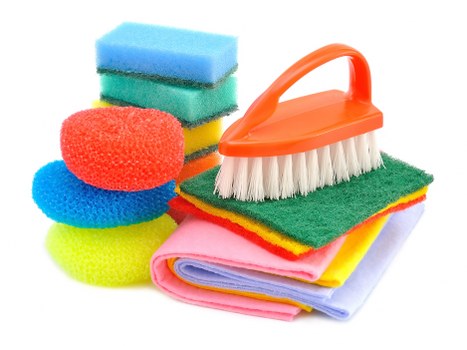 The core steps of a practical risk assessment process for home cleaners include:
- Identifying hazards present on the premises or introduced by cleaning activities;
- Assessing who might be harmed (clients, residents, cleaners, visitors) and how;
- Implementing controls such as signage, modified procedures, or additional PPE;
- Recording findings and reviewing the effectiveness of controls.
![A young woman with light brown hair tied back is smiling and holding a spray bottle filled with blue cleaning solution in her right hand, wearing bright yellow rubber gloves and a purple top. She is standing against a plain white background, and beside her is a purple plastic container filled with various cleaning tools and supplies. Visible items include a white and pink scrub brush, a blue spray bottle, a small spray bottle with orange liquid, multiple cleaning cloths in different colours, and other cleaning accessories. The setting appears to be a professional cleaning environment, illustrating the availability of different cleaning products and tools often used by residential and commercial cleaners. The overall scene emphasizes readiness and professionalism in house cleaning services, related to the company House Cleaners, operating within the UK postcode area corresponding to the inference from the webpage 'Insurance and Safety' for local context, particularly in the vicinity of [TOWN].](/pub/_photos/cleaning/f1459839032.jpg) Regular review and continuous improvement are essential: incident reports, near-miss logs, and periodic audits feed back into training content and risk assessments. When an incident occurs, a prompt investigation identifies whether the root cause was human error, equipment failure, or an unforeseen hazard, and then updates are made to prevent recurrence. For domestic cleaners, this cycle of assess, act, review, and revise creates a resilient safety system that benefits staff wellbeing and client confidence alike.
Regular review and continuous improvement are essential: incident reports, near-miss logs, and periodic audits feed back into training content and risk assessments. When an incident occurs, a prompt investigation identifies whether the root cause was human error, equipment failure, or an unforeseen hazard, and then updates are made to prevent recurrence. For domestic cleaners, this cycle of assess, act, review, and revise creates a resilient safety system that benefits staff wellbeing and client confidence alike.
Practical Safety Measures for Cleaning Teams
Concrete steps for teams of home cleaning professionals include maintaining a current public liability policy, ensuring every team member completes standardized induction training, providing an accessible PPE station, and using a simple digital or paper risk assessment for each new type of job. Documentation matters: training records, PPE issue logs, and signed risk assessment acknowledgments are tangible proof of due diligence that can be critical during insurance reviews or in the event of a claim.
Building a Safety-First Culture
Safety and insurance are mutually reinforcing: a culture that prioritizes safe working practices reduces incidents and supports better insurance outcomes for house cleaners and domestic cleaning businesses. Encourage open reporting, celebrate safe behaviors, and maintain clear leadership commitment to protect both people and property. With the right insurance, ongoing training, appropriate PPE, and a disciplined risk assessment process, home cleaners can deliver excellent service with confidence and integrity.